
Update/Changelog:
Updating: December 23rd 2022
Solo Cleric is now absolutely viable, read the solo section to learn more about builds. I will be updating periodically during the playtest but note that some information will be incomplete.
Class Summary:
| Strength | Agility | Will | Knowledge | Resourcefulness | Health |
| 13 | 11 | 30 | 12 | 8 (SLOW) | 96 |
As with many classes, Cleric has several options for build, and your group composition will dictate which abilities you take. The cleric has a relatively average strength rating but is crippled by extremely slow attack speed.
Contrast to a fighter who has slightly more strength (15), but a massively higher attack speed, and you’ll find while melee is certainly a tool in your kit, you won’t be the primary killer in any team comp. If you want to skip all of the details of the class, head on down to Getting Started as a Cleric or Cleric Builds for a quick explanation of what I think you should take and why.
- Cleric Weapons
- Cleric Skills & Perks
- Cleric Spells
- Getting Started as a Cleric
- Cleric Builds
- Final notes on Cleric
Cleric Weapons
You have the following Melee Weapons at your disposal:
| Melee Weapon | Rating: |
| Flanged Mace (starting equipment) | Excellent |
| Morning Star | Good |
| War Maul | Okay |
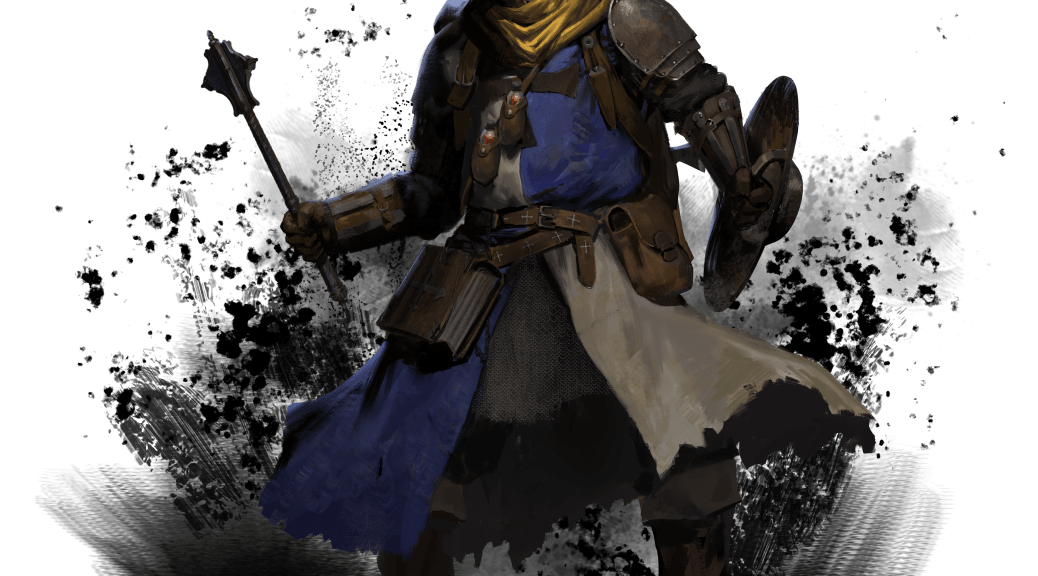
The Flanged Mace is your starting weapon, and it’s the melee weapon you’ll be using the most as a cleric if playing with a team, which should be your primary use-case.
The flanged mace’s attack combination is
[Overhand, Overhand, Overhand …]
As hits to the head deal the most damage, and the cleric’s attack speed is slow, this combo is perfect for the cleric and maximizes the class’s damage. You’ll also be hitting friendly players less because you can clearly see your vector of attack. This weapon can and should absolutely be paired with a shield, blocking will be key for survival as a Cleric. For the class, I give this weapon an Excellent rating, but it has a hard time measuring up to weapons for other classes because of short reach and slow attack-speed.
The Morning Star is not a starting weapon and must be bought or picked up. The damage is comparable to the flanged mace, and the attack patterns is the same as the mace but slower.
Depending on who you’re fighting against, the Morning Star may be a better weapon than the mace in PVP as it deals more damage per hit. Also pairs with a shield.
The War Maul is high(er) damage, but extremely slow, is two-handed so doesn’t pair with a shield, and doesn’t generally pair well with the cleric’s playstyle. You could use this high one-hit damage, but a white war maul is not enough to kill base enemies in one hit. It has a wide swing, which is restrictive in hallways. As of current build, I don’t recommend using this weapon, generally speaking, but you will obliterate a rogue in one hit. I give this weapon an “okay” rating for most builds. Drunken Brawler build is the exception, but I’d consider this pretty specialized.
The Cleric can, and should, also use one of two available magic catalysts:
| Magic Catalyst: | Rating: |
| Staff (starting equipment) | Good |
| Book | Excellent |
The Staff has great utility. It can be used to attack, although switching to a flanged mace is recommended, and it fulfills its function as a catalyst. The only think keeping this from an Excellent rating is its size, and so in certain situations it can snag when attempting a cast, and interrupt. Nonetheless, nothing to really complain about, nothing to celebrate.
The Book does not have a melee attack, but it has a small profile, and therefore won’t catch nearly as often as the staff. For a normal support build, the book is your go-to. It can snag on doorways under specific circumstances, but for the most part you’ll find it has a better profile than the staff, meaning your spells are more likely to fire uninterrupted. If you can find a book, pick it up. They’re often found on shelves in-game, which are in several prominent locations.
Cleric Skills & Perks
As with any class, which perks and skills you take will depend on which build you are going for, but nevertheless, I’ve organized and ranked them for you. I have my preferences, but as the game updates, expect these to change with balance.
The Cleric’s skills are the following:
| Skill: | Rating: |
| Spell Memory (default equipped) | Excellent |
| Judgement | Excellent |
| Holy Purification | Situational |
| Smite | Situational |
Spell Memory is barely worth mentioning, since it’s hardly debatable. You have it set by default and it unlocks all of the Cleric’s spells, without which, you are running a very specific build. I frankly can’t imagine anyone not using this, the identity of the cleric is pretty tied to its spells, which we’ll go over later. Unless you’re showing off or trying something particularly wacky, you’re going to want spell memory.
Judgement gets a lot of hate from other players, because it “comes out of nowhere, it’s unblockable!” and other whining. Truthfully though, this is not always an easy skill to use. It has immense utility in finding invisible players since it notifies the cleric when no target is found, and dealing 30 magic damage and reduced movement speed for 2 seconds can be very helpful in a chase. The downside, if you can call it this, is one must sit still for half a second to cast. The range is also limited to 4.5m, and if the target walks out of range during this casting, the cast will miss, using up the ability until it recharges 30 seconds later. This is my go-to ability, it’s one of the few ways the cleric can really affect a battle–be sure not to team kill. Also one doesn’t need to keep their eye on the target once they start casting, but I find I like to keep an eye on my target anyway for planning my next move. Feel free to use this skill in PVE but note you’ll be missing it if a rogue jumps you and you’re solo.
Holy Purification, like Smite, is situational, but averages out to Good. This skill is primarily useful for PVE. You might read the skill’s description and think “I should always take this skill!”, and you’d be valid, but you’d be wrong. Holy Purification is an AOE centered on the cleric which does 100 base damage to undead within 7.5 meters. The basic usage is to kite as many undead enemies as possible, bunching them together before detonating. Since nearly every enemy in the game at the moment is undead, this sounds ridiculous. While it is good in solo play, which I’ll discuss later, or in certain group comps, you’ll find generally speaking you’re wasting your skill slot taking holy purification. You are also likely to find your faster teammates are killing monsters before you even use your skill, possibly causing unnecessary conflict. At least you know you can’t hurt your team with this skill, though.
Smite is a good skill if you’re the primary tank for some reason in your group comp or if you’re playing aggressively or solo. With that said, you’re a healer, and as a healer, stay in back and chill, don’t go running in like an idiot, keep yourself alive and your health full. You can use this in PVE to help rake in desperately-needed xp without sacrificing utility in PVP, so in some ways it is a compromise. It’s not better than Holy Purification in PVE, it’s not better than Judgement at PVP, it’s in the middle.
As cut-and-dried as the Skills are, Cleric Perks are a bit more nuanced:
| Perk: | Rating: |
| Advanced Healer | Great |
| Blunt Weapon Mastery | Situational |
| Brewmaster | Situational |
| Kindness | Great |
| Perseverance | Great |
| Protection from Evil | Fair |
| Requiem | Fair |
| Undead Slaying | Situational |
Advanced Healer is one of 3 Great choices you have as a support healer. Heal heals yourself, if necessary, and others. Let folks prioritize bandages if they have them out of combat, but in combat, you’re going to be using your base heal, and any amount you can add to it is gold. The only negative is that it’s not so much of a boost that it’s the clear best choice. The “base heal” of Lesser Heal recovers 15 health, so this is a 25% increase to 20 and it boosts Holy Light as well. It pairs with kindness, giving you an additional point of health when healing allies with your Lesser Heal only (3 instead of 2 with or without kindness).
Blunt Weapon Mastery isn’t one of my personal favorites, as it adds just 5% physical power when attacking with a blunt weapon. This isn’t a huge boost, so your build really needs to revolve around upping the combat abilities of the cleric if you’ve chosen this. My advice is don’t waste the slot if you’re playing support healer.
You wanna know about Brewmaster? ok so, your team or solo play has dominated, you’re flush with gold to buy good ale, and you wanna spec your cleric for front-line combat. If this is you, for some reason, Brewmaster is your ability. Pair it with Blunt Weapon Mastery and be a gross abomination of healer and damage. You’ll really have to anticipate drinking ale and probably casting smite ahead of combat, but your life, your choices. It’ll never be my pick, but if you wanna party hard, then get drunk and take Brewmaster.
Kindness is great if you’re playing my favorite Support Healer build. Pairs with Advanced Healer, as previously mentioned. As a healer, you’re gonna want to minimize the damage you take as much as possible, but sometimes a spider will get through your armor or a surprise attack will get you. In this case, or in combat, you can feel slightly safer while you heal your allies that you’re topped up on health. 15% isn’t a lot, but it’s noticeable.
Perseverance probably should be Excellent, since a flat reduction in damage is pretty awesome, but 3 is pretty low. It might save you from death in rare occasions, but it’s most importantly just going to reduce your healing load on yourself out of PVP. Certainly worth taking, but vies for first with Advanced Healer and Kindness.
Protection from Evil is honestly a bummer. You catch fire or get poisoned? It’s now 20% shorter. Who cares? Likely will be useful in PVE against certain bosses but at the moment you’re wasting a slot if you’re focusing healing and not trying to play tank.
Requiem wants to be good, but if you think about it for even a minute, it’s pretty stupid. Resurrection takes forever, so it’s not like you’ll be doing it in the middle of a skirmish, and you’ll have heals for your resurrected buddy immediately after they get up anyway. Likely they’ll have healing items, too. If it were 50% it’d be a better choice, so a lurking rogue can’t just jump on your newly-resurrected ally and kill them again from the shadows, or a skeleton archer won’t snipe their ass. Still, you probably have heals or they do. Pretty mediocre overall.
Undead Slaying is another skill I’d consider part of the beginning grind kit or PVE kit for Cleric. Take it if you’re grinding XP to level your Cleric up quickly, dump it if you’re not the front-line damage dealer, which you probably shouldn’t be. Definitely beats Blunt Weapon Mastery but also pairs with it.
Cleric Spells
Spells got a rework with Playtest 3, and they’re significantly different. You begin with 14 spell slots with which to choose from.
| Spell: | Rating: |
| Lesser Heal | Excellent |
| Holy Light | Excellent |
| Protection | Excellent |
| Divine Strike | Excellent |
| Resurrection | Okay |
| Bless | Good |
| Bind | Situational |
| Cleanse | Situational |
Lesser Heal is awesome. Heal yourself or heal your allies. Don’t heal yourself with this though out of combat unless you’re playing solo or you really need it. Still, you can, and if you have a bonfire to recharge at, there’s no reason to spend consumables. Potions are much cheaper now, so stacking them and some basic bandages and heal and you’re a real tank. If you miss and hit an enemy, you’re healing them though, so don’t fire this off without being sure who you’re hitting. Firing this off without a target at all heals you, which is a good failsafe.
It has 4 cast charges.
Costs 4 spell slots
Holy Light is even more awesome, in that you’re primarily using this in fights to heal allies. You can use it to damage undead, but unless you’re trying to power level your cleric early, probably don’t do this. Like with lesser heal, if you accidentally target an enemy player, you’re healing them, but if you miss then you just… miss. Keeping your cursor on jumpy allies can be a huge pain in the ass, but practice makes perfect. Mastering healing your allies with this and player positioning are key to the cleric support build. It will absolutely decimate mini-bosses.
It has 4 cast charges.
Costs 5 spell slots
Protection: wow, the awesome spells just keep coming, huh? You can cast this on yourself and allies before engaging in combat. I recommend using it on an ally who is taking a peek at enemies, it should help them tank a particularly nasty bow attack once so you know what you’re up against. Unlike with heal, I do recommend you cast this on yourself most of the time before engaging in PVP because you’re usually the juiciest target to the enemies, and you can draw a bit of fire if needed to let your allies get into position. Combat casting can be dicey, because this will protect an enemy if you target them accidentally. Missing casts on you, so it’s not the worst to look away if enemy positioning makes targeting allies impossible and hit yourself.
It has 5 cast charges.
Costs 1 slot.
Divine Strike is one of the new spells as of playtest 3 and it’s awesome. This spell adds 10 weapon damage for a bargain amount of spell slots. Benefits you solo or any damage
Has 5 cast charges.
Costs 2 slots.
Resurrection is now hot garbage compared to what it was. It takes 9 of your spell slots so you’re going to need to be rich to use it, and you’ll probably never touch it. When you do, it’s clutch, which is the only thing saving it from having a Poor rating, but it is still loud and slow. If you have the team comp, you can take it, if not, you’re wasting slots. Generally don’t bother.
It has 1 cast charge.
Costs 8 slots.
Bless I saved for last because it’s alright. It’s not that it’s bad, and boosting your allies is good, but you have 20 seconds of protection, and so you’ll have to cast this on allies first before engaging in combat as it lasts 30 sec. I often use it on myself first, as it boosts your own stats before casting, then on allies, and then use protection, and that is the indication to engage in combat. Any boost is a good boost, and the only reason this doesn’t have a better rating is that, in a pinch when combat happens out of nowhere like it so often does, you won’t have time to cast bless ahead of protection, and you’ll want to be prioritizing that and healing of your allies. If you have time to cast Bless, great, if not, oh well, it’s not usually going to be the difference in PVP anyway.
Has 5 cast charges
Costs 1 slot.
Bind I want to like, but it garbage for now. .75 seconds of movement stop might be useful for high-tier play but as far as I can tell the cast time makes it pretty useless. If you could cast it quickly and stop a wizard from running particularly far with invisibility or you could stop someone from coming through a door at a key moment, but only if you have the stats to actually do this quickly.
Cleanse will probably be better when there’s more conditions to deal with. As of right now it’s not worth taking.
Getting Started as a Cleric
What you should do to start depends quite a lot on if you’re joining your friends to play as a party or playing alone. Playing support healer is useless without someone to support, obviously, but maximizing damage will be equally useless in a party.
You’re not given a great arsenal to start:
- 3 torches
- 1 awful bandage
- Pants that are definitely just long underwear
- A burlap bag doubling as a robe
- A staff in your secondary weapons’ slots
- A flanged-mace and buckler in your primary slots
- Your bald-ass head for a helmet
- No shoes, gloves, jewelry, or dignity
Playing With Yourself:
Solo is viable now. Take Excellent spells, buy a white mace when you can, and tank. Groups will roll you and you’re still slow, so grab loose gold and junk to sell rather than waste time with chests. Accrue gold and bounce as soon as possible. Encounters with rogues won’t mulch you so often anymore, so feel free to be a bit agressive.
Playing With Others:
This is where the actual practical gameplay guide starts. For starters, pick up Advanced Healer or another Excellent perk and Judgement for your open skill slot. If you read the skills section, or you’ve played as a Wizard, you’ll know to leave spell memory alone–you need it to use your Cleric magic, which is dope. You’ll pair well with almost any team comp, but you’ll find yourself floundering if none of you has a ranged attack, and you definitely don’t.
For the most part, you won’t need to do much in PVE against regular monsters, except potentially combat-healing an ally. Practice blocking if you’re unfamiliar with it, and practice keeping your reticle on your allies as they fight so you can heal them in a pinch. Get an idea of what they do to dodge attacks, so you can be ready for them to move in these ways should you try to heal them or use protection. Spell cast order, if you have time to plan ahead of a big fight (PVP, Bosses), should be Bless on yourself to raise your stats for casting, Bless on others, then protection on others, and protection on yourself, if and when you’ll be in danger. You’ll be alternating fairly frequently between your Mace/Shield and your magic catalyst for combat healing and re-upping protection in 20 seconds after it ends or is destroyed. Keep protection up on your squishiest friends, you don’t need to wait for it to end to re-cast it. I usually count in my head so other players don’t use it ending as a window to attack.
If you can keep yourself out of combat and keep your allies healed, all things being equal, you will win your fights. You may need to get in and block for an ally, so don’t stay too far away, be ready to be a distraction. Keep within available Judgement distance. I don’t like to lead with Judgement like so many Clerics do, I like to make my enemy wonder which Skill I’ve taken and when I’m certain they’ve taken a bit of damage, hit them with it and end them. You’re not often going to get kills as a cleric, but if you do, it’s almost certainly from Judgement. Opening with it may cause enemy players to back off excessively or charge in knowing you’re missing your best weapon for 30 seconds. Both of these are bad for you, so wait for an inopportune moment for your enemy when they will have trouble retreating and blast ’em.
As for choosing armor, pick up whatever you can use, try not to be too slow as to lag behind your teammates, but you really want to tank damage as much as possible. Plate boots are loud, and so not my favorite, but otherwise, feel free to wear heavy armor if you can afford the penalty that comes with the weight. You’re always going to be the slowest person on your team anyway, probably interacting with almost nothing but dead enemies and breaking pots, so let your teammates shout out when there’s gear for you, and do the same for them.
Keep yourself alive until the end, volunteer to be the loot mule, protect your allies with your magic and let them protect you with their damage, and you’re good. That’s game. Eventually you’ll be able to afford higher tier weapons, and that mace will begin to shine a bit; always up your Will when you can in order to increase Judgement’s damage.
Cleric Builds
Support Healer is the build we discussed in the last section for team play, so let’s start with that while it’s fresh in your brain:
| Perks | Skills | Armor | Weapons | Rating |
| Advanced healer, Kindness, Perseverance, your choice | Spell Memory, Judgement | Heaviest without significant movement impairment | Mace, Best shield you can find // Book if available, staff if not | Excellent |
Everything should emphasize healing, support, and staying alive.
For items, take potions if you want, but keep in mind they glow in the dark. The wealthier you are, the more you can take–but for the most part you won’t feel like you need to bring anything other than yourself. Campfires are always good to pick up off enemy players. You want to make sure your gold is trending upwards, not downwards, so just adjust your spending until you’re regularly making a robust income and buy items useful for any class. Better to save so you have money when a good weapon comes along than have none.
Downsides are that you will almost certainly be poor, you aren’t going to do much damage except with judgement, you’re not going to farm a lot of experience, so you’ll be much lower level than the rest of your team, and obviously every other downside inherent to the class.
Power Leveler is the aforementioned solo build I discussed. It’s very straight-forward:
| Perks | Skills | Armor | Weapons | Rating |
| Undead slaying, Perseverance, Advanced Healer, your choice | Holy Purification | Light Armor, Prioritize speed | Mace or Morning Star with shield // Book or Staff | Situational |
This is not a build you’re using with teammates. In this build, you’re blasting undead left and right, using Holy Light as a weapon on harder enemies or when overwhelmed, dumping Holy Purification on enemies you’ve kited into a clump, and generally just trying to maximize exp from kills. Bring nothing, do your best to leave the game. Your whole goal here is to try to keep yourself alive as long as possible and kill as many enemies as possible. If you die, you die, you still walk out with XP. If you manage to escape with a looted potion of invisibility or hunting trap, use ’em to help you survive, otherwise stash whatever you find like a chipmunk and accrue gold and XP to help with team play later. You’ll be glad you did.
Drunken Brawler is more of a thought-experiment than a practical build. You’re doing this for fun and to see the amusement of doing damage as a healer. Don’t be surprised when you’re out-damaged by classes designed to actually do it.
| Perks | Skills | Armor | Weapons | Rating |
| Brewmaster, Perseverance, Blunt Weapon Mastery, Protection from Evil or your choice | Smite or Judgement, Spell Memory | As much as possible without sacrificing speed | Any // Book or Staff | Derp |
This is the only build, probably, where you could even remotely consider removing Spell Memory and just taking Smite and Judgement together. You’re already being ridiculous, so if you’re feeling fully ridiculous, do away with spells, take a mace or morning star with a shield in your primary slots and a war maul in your secondary. Buffing yourself and protecting yourself would be better, but who cares.
For items, you’re going to want the best alcohol. It’s cheap, it’s effective, and it’s the crux of the build. You’re here to do damage. Bring plenty of healing if you didn’t bring spells like a maniac, you’re gonna need it.
Final notes on Cleric
Well, there you have it. Cleric is best-used as a support character, but can be played solo. You will eventually find a damage role after accumulating better gear. Leveling and gameplay will be slow, but you’ll feel incredibly useful. There are many techniques one can use to make the best of being a cleric. I will clarify these in the accompanying video to this guide, when it is out, and you will be able to cross reference.
This guide will update with the game, and I will likely make further videos as the guide updates, and as new builds and tactics become uncovered and viable.
Thanks for reading!
 Dank And Danker